Most people who discover the Exumas come back. The ones who don't just haven't found a way to make it work yet.
Brandon Flack spent thirty years inside the marine industry before he ever dropped anchor in the Exumas. Instructor, captain, brand builder, entrepreneur, association president. He has seen the business from almost every seat. When he finally pointed his own boat toward Staniel Cay during COVID, he wasn't a wide-eyed newcomer. He was someone who had spent three decades watching the gap between what gets sold and what actually works.
Staniel Cay Yacht Partners is what happened when he stopped watching that gap and decided to close it.
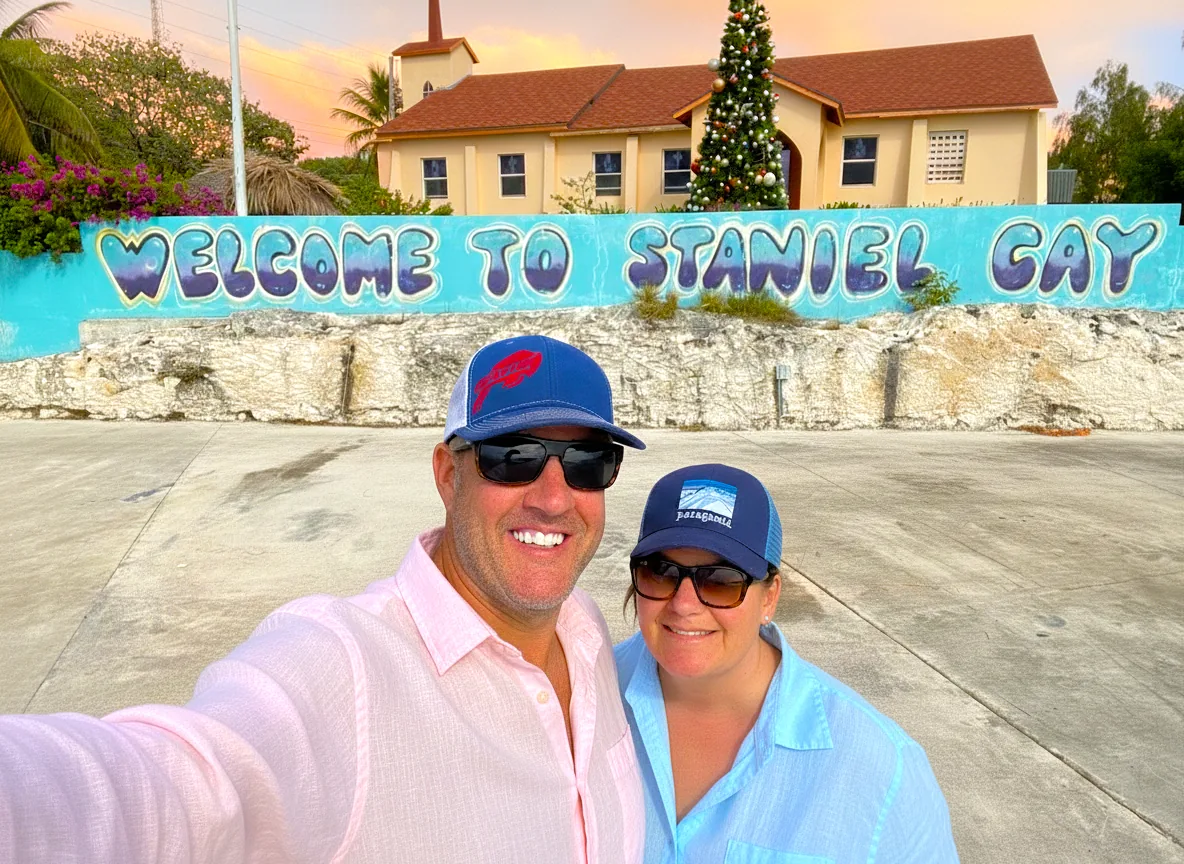
Thirty Years in the Industry
Ben Cesare: You and I go back a long way in this industry, so I'll skip the formal intro. But for people who don't know you, walk them through the path that got you here.
I came up through the water. J World instructor, North Sails rep, professional captain in the Newport scene when that place had a real pulse. I never really left the industry after that. Still a partner at Atlantic Marketing, where I also spent 20 years as Brand Manager for Musto North America. Along the way I launched Social Navigator, served as President of the NMRA, sat on the NMMA board, helped found the MudRatz, and did a stint as Commodore of the Wadawanuck Club. I never needed a lot of sleep.
By the time we cast off on Magic Bus, I had thirty years of receipts. I knew the gear, I knew the manufacturers, and I knew exactly where the gaps were for people who actually wanted to get somewhere remote and stay there. The Exumas didn't teach me that. They just gave me a place to finally do something about it.
How It All Started With Magic Bus
Ben Cesare: So when COVID hit, you didn't head to a marina. You headed offshore with your family. What was that decision?
Honestly, it started because we needed somewhere to go. COVID hit, we had a boat, and we wanted to be somewhere safe and beautiful with our family. The Exumas checked every box. What we didn't expect was how deep we'd fall into the place.
We weren't operating a business. We were just living aboard, exploring, getting it wrong sometimes, figuring out what worked. That's where you learn the real stuff. Not the Instagram version of a destination, but how it actually functions. What the weather does in February versus April. Which anchorages protect you when the wind clocks around. Where to get fuel, what breaks first, who you call when it does.
The boat that carried us through all of that was Magic Bus. She was the foundation of everything we'd eventually build. We lost her this past fall during a delivery. Everyone got off safe, which is the only thing that really matters, but losing that boat was a gut punch. It also made something crystal clear. If you're going to run a professional operation in a place this remote, the standard has to be higher than most charter companies will ever get comfortable with. Not because it's the right thing to say. Because the consequences of falling short are real.
The "Exuma Ready" Standard
Ben Cesare: Some of your past guests now trust you with their own boats. How does that happen, and how do you decide which boats fit?
The owners we work with have usually already done the "easy" Caribbean. They've done the BVIs, they've done the slip-to-slip circuit, and it was great. But now they want the version where there are no other boats on the horizon. The Exumas give you that, but the boat has to be ready for it.
We call it Exuma Ready, and it means something specific. It means your systems work when you need them, not just when conditions are perfect. Enough solar and battery to run the boat for 24 hours straight without engines, generators, or even a good day of sun. A watermaker that gets real use and real service, not one that's been sitting since last season. Redundant pumps, spares on board for everything that can fail. Ground tackle that's actually rated for the environment, not just technically present.
We're pretty direct with owners about this. If you want a passive income stream and you're not interested in investing in the boat, we're probably not the right management company. But if you want a boat that works beautifully in one of the most spectacular places on the water, and you want guests who come back every year and treat it like their own, that's exactly what we build.
"The reason 'Partners' is in our name is that the owner and the guest have the exact same goal. They both want a boat that works perfectly in a place that is notoriously hard on equipment. We're just the bridge."
When that alignment is real, the business side takes care of itself.
A Different Scale Entirely
Ben Cesare: You've sailed a lot of this hemisphere. What's actually different about the Exumas?
The scale. The light. The feeling that you've sailed to the edge of something and it just keeps going.
The water color alone stops people cold the first time. You're anchored in 10 feet and you can count the links on your chain. And then you look up and you're completely alone. No other boats. No beach bars. Just the sound of the water and whatever you brought with you.
What struck me early on was that a place this extraordinary had almost no infrastructure for people to actually experience it. No real charter base. No easy entry point unless you already had your own offshore capable boat. That gap felt like it mattered. It still does.
Getting Here Is Easier Than You Think
Ben Cesare: For someone who's never made the trip, how do they actually get there?
This is the part that surprises people most. They assume it's complicated because it feels remote. It's not.
You fly into Nassau, which is well connected and usually cheap to reach. Then you hop a small regional flight straight into Staniel Cay. It's a short ride, and when you land, we're already waiting at the end of the runway with the dinghy. From wheels down to cocktail in hand takes about ten minutes.
The hard part was always figuring out what to do once you got here. That's the problem we solved.
Why Most Companies Don't Come Here
Ben Cesare: What actually changes when you base boats somewhere this remote?
Everything. And until recently, most of the tools to manage it just didn't exist.
Five or six years ago, getting a reliable internet connection out here was a project. Starlink fixed that, which was a big piece of the puzzle. But communication is only the surface layer. There are no haul-out yards, no big marinas, no chandleries. If something breaks and you don't have the part, the part is days away at best.
What you need instead is a network. You need to know the people out here who quietly keep boats alive in this ecosystem. The generator guy. The diesel mechanic who can be on a plane the same day if it's serious. The local knowledge that only comes from years of actually being here. That's not something you build from a charter catalog. It takes time and it takes showing up.
That network is honestly one of our biggest competitive advantages, even though it's the hardest one to explain in a brochure.
Who We Let Bareboat, and Why
Ben Cesare: How do you decide who bareboats here, and how does that vet process actually feel to a guest?
We learned by taking our lumps. Early days, we had older boats, real problems, and no shortcuts. Flying in parts, flying in mechanics, learning what true redundancy looks like when the nearest help is potentially three days away by sea. That experience is why we can do this well now, and it's also why we take the bareboat question seriously.
The Exumas are not the BVI. That's not a knock on the BVI. It's just the truth. Out here, if your windlass fails at the wrong moment in the wrong cut, you have a real problem. So we have real conversations with every bareboat inquiry. Tell us about your offshore experience. Talk us through a passage that went sideways and how you handled it. We want to understand how you think, not just how many miles you've logged.
If there's any hesitation, we don't say no. We say bring one of our crew for the first trip. Let them show you the cuts, the tides, the quirks of the boat. Nine times out of ten, guests who go that route come back the following season fully qualified and with a completely different level of confidence out here. They don't just know the boat. They know these waters.
"That process has built something we didn't fully anticipate. A group of past guests who we now think of as partners as much as customers. That kind of relationship doesn't come from a booking form."
The Moment People Don't See Coming
Ben Cesare: What experience tends to stay with first-timers?
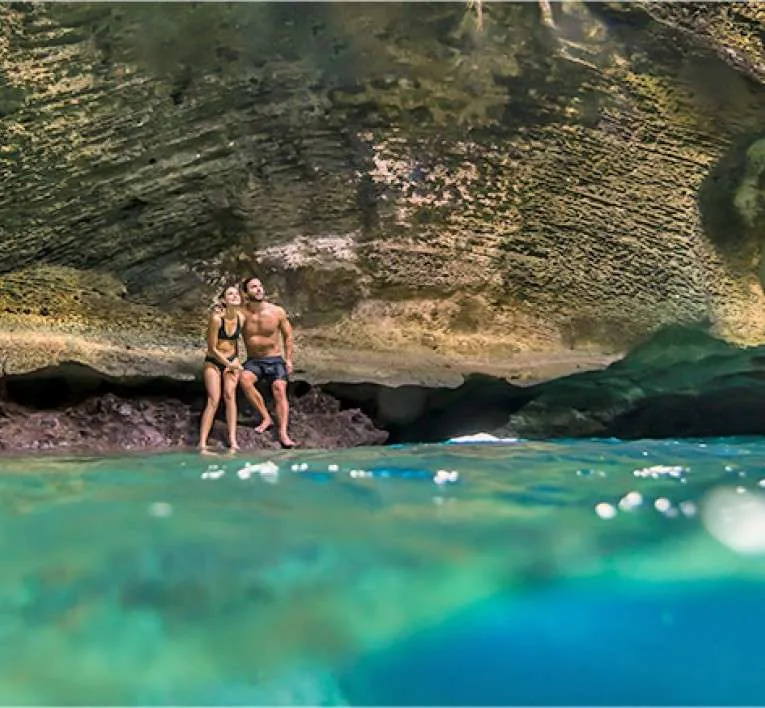
Thunderball Grotto, without question. And what's funny is it's right there. You don't sail a day to reach it. It's a short dinghy ride from the anchorage. Because it's so close and so accessible, people almost underestimate it.
Then they go in.
There's a moment when the light comes through the ceiling and hits the water and the fish, and something shifts. Every other underwater experience they've had gets recalibrated. I've watched serious divers come out of that cave genuinely quiet. That kind of place doesn't need a hard sell. You just need to get people there.
Where the Map Gets Interesting
Ben Cesare: Beyond the well-known spots, what surprises even experienced sailors?
Warderick Wells and the Exuma Park are extraordinary and get the attention they deserve. Shroud Cay's lazy river is one of those places that looks like it was designed by someone who didn't believe in limits.
But the stuff that really gets people is the spots you only reach with a shallow draft boat and someone who knows the tides. Certain cuts near Hawksbill Cay that a big yacht simply cannot get into. You drop the hook and look around and you're genuinely the only human being for miles. That's the experience people come back for. You can't book that on a charter website. You have to know where to go and how to get there.
Who This Is For
Ben Cesare: Who connects most with this style of cruising?
People who are done being entertained and ready to be somewhere. That's the best way I can put it.
The Exumas don't have a nightlife circuit. There's no marina bar scene. The Staniel Cay Yacht Club is a genuine institution and worth every visit, but it's not loud and it's not trying to be. What this place has is beaches where you won't see another person from one end to the other. Silence that actually registers. Stars the way stars are supposed to look.
If that sounds like exactly what you need, it is. If you're not sure, it probably isn't for you, and that's fine. We'd rather help you figure that out before you book than after you arrive.
Why 80 Percent Come Back
Ben Cesare: Your return rate is over 80 percent. What drives that?
Two things. The place itself, and the fact that one week barely touches it.
Most guests arrive with a BVI frame of reference. They know how to cruise. They have high standards. And then they get out here and realize the scale is just completely different. A week in the Exumas and you've scratched the surface. You leave knowing where you want to go next time and genuinely looking forward to it.
The other piece is trust. If a guest has a great trip and the boat worked perfectly and we handled everything without drama, they're not going back to a booking platform to start over. They're calling us. That's what we're building. Not the loudest operation in the Caribbean. The one people trust with their time.
"We're not trying to be the loudest operation in the Caribbean. We're trying to be the one people trust with their time."